




Buying dresses online gets much easier the moment you stop trusting the size label first and start trusting your measurements. If you have ever wondered how to measure for dress size, how to know your dress size online, or why one size medium fits perfectly while another feels completely wrong, the answer is usually simple: the number on the tag matters less than your bust, waist, hips, shoulder, and dress-length measurements.
If dress sizing has ever felt confusing, this guide is for you. We will show you how to measure yourself accurately, how to read a women’s dress size chart, which measurements matter most for different dress silhouettes, and what to do if you fall between sizes—so you can save time, avoid returns, and feel more confident when shopping online.
Whether you are shopping for an everyday midi, a relaxed shirt dress, a plus-size printed maxi, or a more polished occasion style, this article will help you choose a better fit the first time.
Fast answer: To measure for dress size, use a soft measuring tape and record your bust, natural waist, and hips first. Then check shoulder width, sleeve length, and dress length when the style is structured, long-sleeved, or full-length. When a dress has shaping at the waist, prioritize waist. When it has a narrow top, prioritize bust and shoulders. When it is relaxed or flowy, compare the product’s silhouette and size chart before deciding whether you want a neater fit or extra ease.
Quick Jump Links
- Why Measurements Matter More Than the Tag
- What You Need Before Measuring
- How to Measure Bust, Waist, Hips, Shoulders, and Length
- How to Read a Women’s Dress Size Chart
- Which Measurement Matters Most by Dress Type
- How Different Dress Styles Fit
- What to Do If You’re Between Dress Sizes
- Common Dress Measuring Mistakes
- Shop by Your Measurements at Uoozee
- FAQ
Why Measurements Matter More Than the Tag
The biggest online-shopping mistake is assuming your dress size is one fixed number across every brand, every fabric, and every silhouette. It is not. A body-skimming midi, a loose shirt dress, a tiered maxi, and a structured occasion dress can all fit very differently even when they carry the same size label.
That is why smart women use dress measurements, not guesswork. A dress size chart tells you how the garment is intended to fit. Your tape measure tells you whether that fit will work on your body. When you compare the two, you move from “I hope this works” to “I know what to expect.”
This is especially important when you shop online for:
- midi dresses, where shoulder line and overall length affect proportion;
- shirt dresses, where bust, waist, and sleeve ease can change the whole look;
- maxi dresses, where full length and movement matter just as much as width;
- plus-size dresses, where ease, drape, and intended looseness should be read carefully instead of sizing down automatically.
If you are just starting to compare silhouettes, browsing the Uoozee Dresses collection is a practical way to see how different cuts are described before you decide which size details matter most for your body.
The short version
Use measurements when you shop because fit is about proportions, not just size names. Two dresses can both be “L,” but one may be cut for a loose shoulder, one for a defined waist, and one for a fuller skirt with a narrow bodice. That is why women who shop well online do not ask only, “What size am I?” They ask, “How is this particular dress cut?”
What You Need Before Measuring
You do not need a complicated setup to figure out how to measure your dress size. You just need a few minutes and the right basics.
Measure with these simple tools
- A soft measuring tape — the flexible kind used for clothing.
- Fitted underwear or a thin base layer — skip bulky clothing.
- A mirror — helpful for making sure the tape stays level.
- Your phone notes app — record each number immediately.
- Optional: a friend — especially useful for shoulder width or back measurements.
Stand naturally. Do not suck in your stomach. Do not pull the tape tight like a corset. It should sit close to the body, but it should not dig in. You are trying to measure your body as it really is, not your body on its best behavior for three seconds.
What to wear while measuring
The best choice is a non-padded bra or the bra you normally wear with dresses, plus fitted underwear. If you measure over sweaters, jeans, or shapewear you never actually wear, you will create numbers that do not reflect your real everyday fit.
Should you measure in inches or centimeters?
Either works, as long as you stay consistent. Many online product pages show both. If the site provides measurements in centimeters and inches, use whichever you understand fastest, then double-check before ordering.
How to Measure for Dress Size Step by Step
Wondering how to measure your bust, waist, and hips for a dress? These are the measurements that matter most when choosing the right size online.
| Measurement | How to take it | Common mistake |
|---|---|---|
| Bust | Wrap the tape around the fullest part of your bust, keeping it level across your back. | Letting the tape slide too high under the arms or pulling it too tight. |
| Waist | Measure the narrowest part of your natural waist, usually above the belly button and below the rib cage. | Measuring where your pants sit instead of your true waist. |
| Hips | Stand with feet together and measure around the fullest part of your hips and seat. | Measuring too high on the hip bones. |
| Shoulder | Measure from one shoulder point to the other across your upper back. | Ignoring this on structured or long-sleeve dresses. |
| Sleeve length | Measure from the shoulder seam area down to where you want the sleeve to end. | Skipping it on fitted sleeves and then wondering why the arm fit feels wrong. |
| Dress length | Measure from the highest shoulder point down to your preferred hemline. | Assuming every “midi” or “maxi” hits the same place on every height. |
1) How to measure bust for dress size
Wrap the tape around the fullest part of your bust. Keep it level and parallel to the floor. This is one of the most important measurements for dresses with a defined top, buttons, darting, wrap fronts, or a tailored shoulder line. If the bust is too small, the whole dress usually looks off even when the skirt fits.
2) How to measure waist for dress size
Your natural waist is the narrowest part of your torso. Bend slightly to one side if you need help finding it. That crease is usually your waistline. This number matters most on belted dresses, fit-and-flare shapes, shirt dresses with waist structure, and any style that is meant to skim the body rather than hang straight.
3) How to measure hips for dress size
Measure around the fullest part of your hips and seat with your feet together. Hips matter most on straighter skirts, bodycon dresses, slip styles, and any dress that narrows through the lower half. On very loose A-line or tiered dresses, hips may matter less than bust, shoulders, and length.
4) How to measure shoulders
This is the measurement many women skip, and it is one reason a dress can look “not quite right” even when it technically fits. Shoulder width matters more than people think on high-neck midis, shirt dresses, long-sleeve styles, and polished event dresses. If the shoulders are too narrow, the dress may pull. If they are too wide, the dress can look droopy or oversized in an unflattering way.
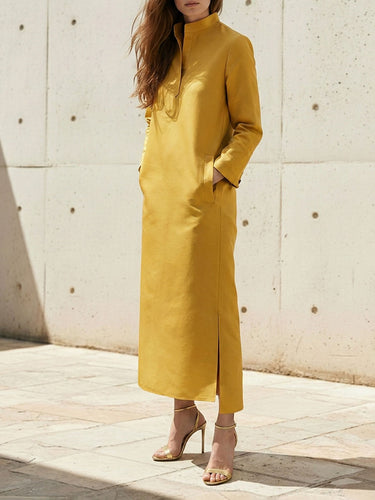
A clean, shoulder-defined midi shape is exactly the kind of dress where shoulder width, sleeve length, and hem length can change the whole fit.
If you like streamlined midis, the Long Sleeves Loose Solid Color Split-Side Stand Collar Midi Dresses page is a useful example of the kind of product page that surfaces bust, shoulder, sleeve, and length measurements clearly.
5) How to measure sleeve length
Measure from the shoulder point to your desired sleeve end. If you are between sizes and the dress is long-sleeved, this measurement can help you decide whether you want a neater fit or a little extra room. It matters less on flutter sleeves and more on narrower, polished sleeves.
6) How to measure dress length
For online shopping, length is not a small detail. It is a huge one. A midi on one person can look almost ankle-length on another. A maxi can sweep the floor or sit just above the ankle depending on your height and the dress cut. Measure from the highest shoulder point down to where you want the hem to land, then compare that with the product chart.
How to Read a Women’s Dress Size Chart Without Overthinking It
Once you know your numbers, the next question is how to read a women’s dress size chart. The easiest approach is not to compare labels first. Compare measurements first.
Start with the measurement that matters most for the dress
- Structured top or fitted bust: start with bust.
- Defined waist or belted shape: start with waist.
- Straight or narrow lower half: check hips carefully.
- Polished shoulder line or sleeves: check shoulder and sleeve too.
- Midi or maxi silhouette: always check overall length.
Understand the difference between body fit and garment ease
Not every dress is supposed to sit close to the body. Some dresses are intentionally loose, draped, tiered, or oversized. That means the garment measurements may be larger than your body measurements by design. This extra room is called ease. The question is not “Why is the garment bigger than me?” The question is “Does this dress need room to move and hang the way it was designed?”
Look at the silhouette words
Words like loose, A-line, bodycon, tiered, shirt dress, and split-side are not decoration. They are fit clues. Read them like part of the size chart.
Use the image, the chart, and the cut together
The most accurate size decision usually comes from reading all three together:
- your body measurements,
- the size chart,
- the visual cut of the dress.
That combination is how you go from “what is my dress size?” to “what is my best size in this exact dress?”
Which Measurement Matters Most by Dress Type?
This is where online shopping becomes much more intuitive. Instead of treating every dress the same, match the measurement to the silhouette.
Midi dresses
For most midis, especially polished ones, start with bust and shoulders, then confirm length. The skirt usually has enough room, but the upper half determines whether the dress looks elegant or awkward. If you are shopping this shape often, the Uoozee Midi Dresses collection is a good category to compare how different necklines and sleeve shapes change fit needs.
Shirt dresses
Shirt dresses often look easy, but they still need balance through the bust, waist, and shoulder line. If the dress buttons or defines the waist, do not size based on length alone. A shirt dress should feel relaxed, not stretched across the chest or bulky through the torso.
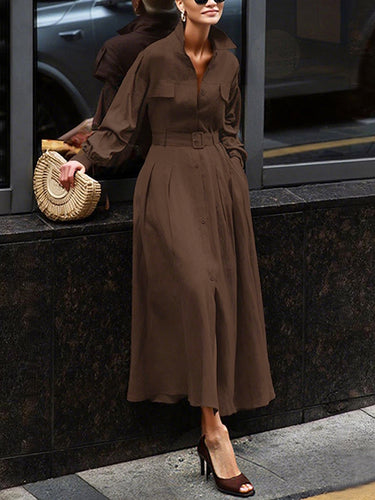
Shirt dresses are usually easier to wear when bust, waist, shoulder, and sleeve measurements all work together instead of relying on the label alone.
The Long Sleeves Loose Solid Color Lapel Collar Maxi Shirt Dresses product page is a good example of a style where bust, waist, shoulder, sleeve, and full length all deserve attention before you choose a size.
If this is your favorite silhouette, the Uoozee Shirt Dresses collection is worth browsing once you know your core measurements.
Loose and plus-size dresses
With relaxed and plus-size shapes, many women make the same mistake: sizing down too aggressively because they are afraid of extra fabric. But ease is often part of the design. A loose dress is meant to drape, move, and feel comfortable. The smarter approach is to decide whether you want the intended easy fit or a slightly neater fit, then compare your bust and shoulder measurements carefully.

On relaxed and plus-size dresses, bust and shoulder space affect comfort, but the intended looseness is part of the style—not always a sign to size down.
The Loose Plus Size Printed Split-Joint Lapel Maxi Dresses Shirt Dress is a useful example of why women choosing plus-size styles should compare the actual size chart first instead of guessing from the silhouette photo alone.
Occasion or statement maxis
When a dress is more dramatic, polished, or occasion-ready, the waist and bust often matter more than they do on an everyday loose style. Full skirts and pleats may feel forgiving, but if the top half or waist area is off, the dress can lose its shape quickly.

Occasion dresses may look flowy, but bust and waist are often the key measurements behind whether the shape feels elevated or overwhelming.
The Long Sleeves Loose Pleated Solid Color Split-Joint Tiered Round-Neck Maxi Dresses illustrates why a visually relaxed dress can still need careful attention to bust, waist, and full length.
How Different Dress Styles Change the Way You Size
If you have ever felt confused about your dress size while shopping online, you are not alone. The reason is simple: dress sizing is not just about your body measurements. It is also about how each dress is designed to fit. Once you understand that, it becomes much easier to choose a size that actually works for you.
A-line and fit-and-flare dresses
These are generally more forgiving through the hips, so bust and waist matter most. If you have a fuller bust and a smaller waist, choose the size that fits your bust first, then decide whether tailoring or a belt could refine the waist if needed.
Straight and column dresses
These need more balance across bust, waist, and hips. Because the silhouette does not flare out much, every measurement matters a little more evenly. If you are between sizes here, choosing based on the largest measurement is usually safest.
Relaxed shirt dresses
These work best when they still look intentional. Too tight, and the front can pull. Too big, and the whole outfit can read shapeless. Prioritize bust and shoulders first, then check waist and length for the overall look you want.
Maxi dresses
Do not underestimate length. A beautiful maxi that drags, catches under your shoes, or cuts you off awkwardly will not feel right no matter how perfect the bust and waist are. For maxis, check length every time.
Soft, tiered, or flowy dresses
These tend to be more forgiving, but that does not mean you can ignore the chart. The upper body still matters. If the neckline, bust, or shoulders are off, even the prettiest drape can lose its shape.
Body-skimming or occasion styles
For closer fits, size decisions should be based on your largest key measurement. If your waist is the tightest point in the design, buy for waist. If the top is more structured, buy for bust and shoulders.
How Fabric Changes Fit More Than You Might Expect
Fabric is the missing piece in a lot of sizing decisions. Two dresses with the same measurements will not feel the same if one is structured and the other has natural drape or stretch.
Little or no stretch
If the fabric has less give, you need more accuracy. Do not buy a fitted non-stretch dress hoping it will “work itself out.” It usually will not.
Soft drape
Flowy fabrics often allow a bit more flexibility in fit, especially in the lower half. That is why waist and bust still matter, but the dress may feel more forgiving overall.
Loose silhouette + light fabric
This combination can feel roomy by design. Before sizing down, ask yourself whether you dislike the dress or you just are not used to seeing intentional ease.
Structured collars, sleeves, or shoulders
Whenever a dress has those details, the upper body fit becomes more important, even if the rest of the silhouette looks relaxed.
What to Do If You’re Between Dress Sizes
This is one of the most common real-life shopping questions: what if I am between dress sizes? The best answer depends on the dress.
Size up when:
- the dress is structured through the bust or shoulders;
- the waist is defined and your waist measurement is close to the next size up;
- the fabric has very little stretch;
- you are buying for comfort, movement, or all-day wear;
- the dress buttons through the front.
Stay closer to your smaller size when:
- the dress is intentionally loose or oversized;
- the product description emphasizes relaxed fit;
- the skirt is wide and forgiving;
- you prefer a neater, less voluminous silhouette.
A simple rule
Choose the size that accommodates your most important measurement in the area that has the least forgiveness. In other words: buy for the part of the dress that cannot easily “cheat.” Bust, waist, shoulders, and non-stretch points matter more than a wide flowing hem.
How to Measure for Different Length Preferences
Not every woman wants the same final look from the same dress. One person wants a true midi. Another wants that same dress to hit lower on the calf. One person loves a floor-skimming maxi. Another wants ankle length for easier walking. That is why knowing your preferred hemline matters.
How to measure for a midi dress
Measure from the highest shoulder point to where you want the hem to land on your leg. For many women, that is mid-calf, but the exact ideal depends on height and personal preference.
How to measure for a maxi dress
Measure from shoulder to ankle or floor depending on your shoe height and the final look you want. If you plan to wear heels, account for them while measuring. A maxi that looks perfect in photos can feel frustrating if it is too long for your actual shoes.
Why “midi” and “maxi” are not exact lengths
These are style categories, not universal measurements. A product chart gives you the actual number. That number is what you should trust.
Common Dress Measuring Mistakes That Lead to Bad Fit
Most size disappointments come from a few predictable mistakes, not from some mysterious sizing problem.
1) Measuring over bulky clothing
This adds false width and leads to poor size choices.
2) Pulling the tape too tight
If the tape is digging in, your order may arrive too small even though your notes looked “good.”
3) Ignoring shoulders and sleeves
This matters more than people think, especially on long-sleeved and polished dresses.
4) Using old measurements
Your body, bra choice, or preferences may have changed. Re-measure if it has been a while.
5) Shopping by your favorite size, not by the dress
Your favorite size in one cut is not automatically your best size in another.
6) Forgetting that style intent matters
A loose silhouette that fits as designed is not “too big.” A fitted silhouette that strains is not “close enough.”
My Practical Checklist Before I Order a Dress Online
If you want the most useful shortcut from this whole guide, use this simple checklist before you buy:
- Take fresh measurements: bust, waist, hips.
- Add shoulder, sleeve, and preferred dress length for more accuracy.
- Look at the silhouette words: loose, fitted, A-line, shirt dress, maxi, midi.
- Decide which area of the dress has the least forgiveness.
- Compare that area to the chart first.
- Check whether you want the intended fit or a slightly looser/neater result.
- Only then pick the size.
That is the real answer to how to measure for dress size: not just taking numbers, but using the right numbers for the right dress.
Shop by Your Measurements at Uoozee
Once you know your bust, waist, hips, shoulders, and preferred dress length, online dress shopping becomes far less random. You can stop chasing labels and start choosing silhouettes that actually work for your body and your style goals.
If you are ready to put your measurements to work, start with styles that make size comparison easy: polished midis, relaxed shirt dresses, and full-length dresses where product charts help you choose more confidently.
Tip: before you order, save your bust, waist, hip, shoulder, and preferred hemline measurements in your phone so you can compare product pages in seconds instead of guessing every time.
FAQ — How to Measure for Dress Size
How do I measure myself for a dress size?
Measure your bust, natural waist, and fullest hips first. Then add shoulder width, sleeve length, and dress length when the style is structured, long-sleeved, midi, or maxi. Compare those numbers to the product size chart instead of relying only on the tag size.
What are the three main measurements for women’s dress size?
The three main measurements are bust, waist, and hips. For many dresses, these are the starting point. Structured dresses may also require shoulder and sleeve measurements for the best fit.
How do I measure bust, waist, and hips for a dress?
Measure bust at the fullest part, waist at the narrowest natural point, and hips at the fullest point around your seat. Keep the tape level and close to the body without pulling tight.
How do I know my dress size when shopping online?
The most reliable way is to compare your current body measurements to the specific size chart on the product page. Dress size labels vary by brand and by silhouette.
Should I size up or down if I’m between dress sizes?
Size up when the dress is structured, non-stretch, buttoned, or waist-defined. Stay closer to the smaller size when the dress is intentionally loose, draped, or oversized and you prefer a neater fit.
Do I need to measure shoulders for dresses?
Yes, especially for long-sleeve dresses, high-neck dresses, shirt dresses, and cleaner tailored silhouettes. Shoulder fit can affect how polished the entire dress looks.
How important is dress length when choosing size?
Very important for midis and maxis. A style description tells you the category, but the size chart tells you the actual garment length. That is the number to trust.
Why does the same dress size fit differently in different dresses?
Because fabric, silhouette, ease, and cut all change fit. A relaxed shirt dress and a defined-waist occasion dress can feel completely different even if they share the same size label.
What measurement matters most for a shirt dress?
Usually bust and shoulders first, then waist if the style has shaping or a belt effect. Sleeve length also matters more on shirt dresses than many women expect.
What measurement matters most for a maxi dress?
It depends on the cut, but length is always important. After that, prioritize bust or waist depending on whether the top is fitted or the waist is defined.
Can I use my usual size if the dress is loose fit?
Sometimes yes, but always compare the chart. Loose-fit dresses are designed with ease, so they may look roomier on purpose. Decide whether you want the intended drape or a more fitted result.
What if my bust and waist fall into different sizes?
Buy for the measurement in the least forgiving part of the dress. For structured tops, prioritize bust. For waist-defined dresses, prioritize waist. Then evaluate whether the rest of the silhouette has enough ease to balance the fit.
