




If you want to know what is a size 36 dress in US sizing, the quick answer is simple: EU 36 is usually closest to a US size 4 in women’s dresses. In many cases, that gives you the right starting point.
But you already know that a size chart alone does not tell you everything. One dress may feel neat and structured, while another in the same size may feel soft, easy, and relaxed. That difference often comes from the cut, fabric, and shape of the dress rather than the number on the label.
The easiest way to choose well is to treat EU 36 = US 4 as your base, then check bust, waist, hips, fabric, and silhouette. Once you do that, buying dresses online becomes much easier. You stop guessing, you avoid unnecessary returns, and you pick a dress that actually feels right on your body.
This guide is written for you from a real women’s fashion point of view. You will get the size conversion, a practical fit explanation, a simple chart, measurement tips, advice for choosing between sizes, and dress ideas that help you feel confident instead of uncertain.
Quick Jump Links
- What Is a Size 36 Dress in US?
- Why Size 36 Can Fit Differently
- EU to US Dress Size Chart
- How You Can Check the Fit
- Is Size 36 a Small or Medium?
- When You Should Size Up or Down
- Best Dress Types for EU 36 / US 4
- How You Can Buy Dresses Online with More Confidence
- What to Wear by Occasion
- Browse Dresses at Uoozee
- FAQ
What Is a Size 36 Dress in US?
A women’s EU size 36 dress is usually equivalent to a US size 4. That is the most useful short answer when you compare European sizing with US sizing.
Still, you should think of that conversion as a starting point, not a final guarantee. If a dress has a fixed waist seam, a back zipper, a fitted bust, or very little stretch, you may need a more careful fit check. If the dress is wrapped, belted, relaxed, or softly draped, you often get more flexibility.
A simple way to think about it is this: the conversion tells you where to begin, but the dress details tell you what to choose.
The quick answer
- EU 36 usually converts to US 4
- It is often considered Small in women’s letter sizing
- Depending on the brand and cut, it may sometimes feel closer to US 2 or US 6
- The safest way to decide is to compare bust, waist, and hip measurements
Why Size 36 Can Fit Differently
When you ask what is a size 36 dress in US, you are often asking a bigger question: Will this dress fit the way you want it to? That is why the number alone never feels like enough.
1) Brands do not cut sizes in exactly the same way
One brand may make a size 36 narrower at the waist and shoulders. Another may give you more ease through the bust and hips. So even when two dresses carry the same number, they can feel very different once you put them on.
2) The silhouette changes how the size feels
A fitted sheath dress, a shirt dress, a wrap dress, a slip dress, and a relaxed maxi all sit differently on your body. A structured shape usually needs more precision. A softer shape gives you more room to work with.
3) Fabric matters more than you may expect
Stretchy knits, smocking, and adjustable waists usually feel more forgiving. Crisp woven fabrics, lined dresses, zip-back occasion styles, and more tailored shapes often need a closer fit. That means you may stay true to size in one dress and want more room in another.
4) Your preferred fit matters too
You may want a body-skimming look, or you may want easier movement through the waist and hips. Both are valid. The right size is not just the one that closes. It is the one that gives you the look and feel you actually want.
EU to US Dress Size Conversion Chart
To help you place size 36 in context, here is a simple chart:
| EU Size | Approx. US Size | Common Interpretation |
|---|---|---|
| EU 34 | US 2 | Slim / petite-leaning fit range |
| EU 36 | US 4 | Often treated as Small in women’s dresses |
| EU 38 | US 6 | A very common fitted-dress size range |
| EU 40 | US 8 | More room through bust, waist, and hips |
This chart is useful because it shows you that size 36 sits in a common range where fit details really matter. It is not only about converting a number. It is about understanding how that number behaves across different dress types.
How You Can Check the Fit
The easiest way to avoid guessing is to measure yourself once and keep those numbers ready. If you know your bust, waist, and hips, you can compare them against a size guide in just a moment.
Measure these three areas first
- Bust: around the fullest part of your bust
- Waist: around the narrowest part of your natural waist
- Hips: around the fullest part of your hips and seat
These numbers matter because the dress responds to your measurements, not to a conversion chart by itself. If your waist matches size 36 but your bust is closer to the next size, one silhouette may fit beautifully while another may feel tight.
If you prefer softer day dresses that usually feel easier to wear, a style like this floral geometric midi dress shows how a more relaxed cut can feel friendlier than a sharply structured piece.

Midi dresses are one of the easiest places to begin when you use EU 36 / US 4 as your size baseline.
Think about how you want the dress to feel
Even if size 36 is technically correct, you still want to ask whether you want a closer fit or more ease. That answer affects your best size decision almost as much as the chart does.
Is Size 36 a Small or Medium?
In most women’s dresses, size 36 is usually closer to a Small. If you want a quick letter-size reference, Small is generally the better match.
Still, letter sizing has the same limitation as number sizing. One brand’s Small may feel neat and tailored, while another brand’s Small may feel more relaxed. That is why measurements and dress construction matter so much.
When size 36 often feels like a true Small
- Fitted waist dresses
- Back-zip silhouettes
- Non-stretch woven fabrics
- Sharper shoulder lines
- Occasion dresses with a closer fit
When size 36 can feel more flexible
- Wrap dresses
- Shirt dresses with a tie or belt
- Elastic-back or smocked styles
- Relaxed maxis and day dresses
- Knits and softer fabrics
When You Should Size Up or Down
Once you know that EU 36 usually maps to US 4, the next step is knowing when to stay there and when to move. A very practical rule is this: choose according to the least forgiving part of the dress.
Size up when:
- Your bust or waist is right on the edge of the chart
- The dress has very little stretch
- It has a back zipper and a close body fit
- You want comfort and movement
- You need more torso or length ease
Stay true to size when:
- The dress has built-in ease
- The waist is adjustable or belted
- The fabric drapes softly
- The silhouette is intentionally relaxed
- Your measurements sit well inside the size range
Only size down when:
- The dress is clearly oversized
- The style notes indicate it runs large
- Your measurements are comfortably below the cut of that size
If you like cleaner, more structured pieces, a style like this solid lapel shirt dress shows why upper-body ease and waist definition can matter more than the conversion number alone.
Best Dress Types for EU 36 / US 4
If you usually wear EU 36, the most flattering dresses are often the ones that create shape without making you feel restricted. You usually want line, balance, and enough ease to move comfortably.
1) Midi dresses
Midi dresses are often the safest all-around choice. They work for daytime plans, dinners, travel, and repeat wear. They also make it easier for you to judge proportion without committing to an extremely short or very body-hugging fit.
2) Maxi dresses
Maxi dresses work beautifully when you want movement, coverage, and an easy elegant feel. If you usually wear size 36, a maxi with visible waist definition often gives you the best result: flattering, comfortable, and polished.

Maxi dresses are a strong option when you want your size to feel elegant, easy, and forgiving.
If you like longer, cleaner shapes, this solid lapel maxi shirt dress is a good example of how structure and ease can work together.
3) Mini dresses
Mini dresses can look great on you when the cut is intentional and the proportions feel balanced. The best results usually come when the shoulder line, waist placement, and hem length all work together instead of competing with each other.
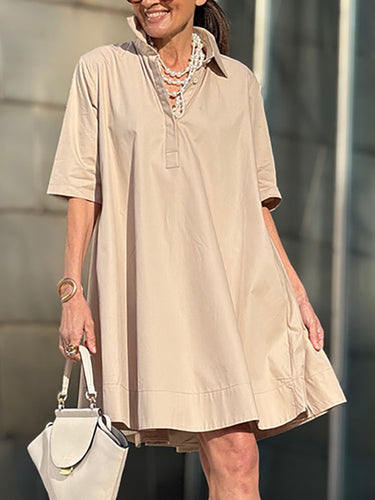
Mini dresses look best when the proportions feel clean from shoulder to hem.
4) Wrap and belted shapes
If you often feel between sizes, wrap and belted dresses are some of the easiest options. They give you flexibility through the waist and torso, which helps the fit feel more natural.
5) Occasion-ready styles with waist definition
If you want something for a wedding, dinner, party, or special plan, a shape with visible waist definition often works better than a straight cut. A style like this belted sleeveless pleated maxi shows how the silhouette itself can help the fit feel more refined.
How You Can Buy Dresses Online with More Confidence
If you want fewer mistakes and more confidence, do not rely on the size number alone. A much better method is conversion + measurements + silhouette + fabric. That combination gives you a far clearer picture than “I am usually a 4” or “I think I am a Small.”
Use this 6-step checklist
- Start with the conversion: EU 36 usually points to US 4
- Compare your bust, waist, and hips
- Check the silhouette: fitted, belted, shirt dress, wrap, relaxed, or body-skimming
- Read the fabric details: stretch, no stretch, drapey, crisp, lined, or lightweight
- Be honest about your preferred fit
- Use the item-level size guide before checkout
This matters even more when you need a dress for travel, an event, or a special day. A careful fit check usually saves you more time than guessing and hoping for the best.
Think in terms of fit, not just the number
Instead of focusing only on the converted size, think about how you want the dress to behave on your body. Do you want movement? Waist definition? A cleaner upper-body line? A softer, more forgiving fit? Those answers usually guide you more accurately than the number alone.
What to Wear by Occasion
For everyday wear
If you want a dress you can wear often, choose a midi, shirt dress, or relaxed day dress that gives you shape without feeling rigid. These are easy to repeat and easy to style.
For events and special plans
When the occasion matters, fit precision matters more too. This is where you should rely less on the number alone and more on measurements, structure, and fabric.
For warm weather
In warmer weather, many women around EU 36 / US 4 prefer dresses with movement, waist definition, and lighter fabrics. You want the dress to feel easy on your body rather than heavy or restrictive.
For a polished minimal look
If you prefer cleaner styling over softer romantic details, shirt dresses, solid-color midis, and sleek maxis are often the easiest route. They help your fit look intentional without feeling overdone.
Across every occasion, the best size is not just the one that technically fits. It is the one that lets the dress look the way you want it to look on you.
Common Mistakes
Using only the conversion chart
The chart is useful, but it cannot tell you whether the bust is narrow, whether the waist seam sits high, or whether the dress has enough ease where you need it.
Ignoring the fabric
A soft drapey fabric often feels easier than a rigid woven. If you skip that detail, you may end up with a size that is technically correct but does not feel right.
Assuming every Small behaves the same way
EU 36 often lines up with Small, but one brand’s Small may feel fitted while another feels relaxed. The label alone does not finish the story.
Buying for an imaginary fit
If you want comfort, choose with comfort in mind. If you want a more tailored result, choose for that on purpose. The right dress supports how you actually want to feel wearing it.
Browse Dresses at Uoozee
If you wanted a clear answer to what is a size 36 dress in US, you now have the practical version: EU 36 usually starts at US 4, but the best choice depends on the measurements, silhouette, fabric, and fit you want.
That means you can choose more confidently. Instead of relying on the number alone, you can focus on the styles that usually work well for this size range—midis, maxis, shirt dresses, wrap shapes, and occasion styles with waist definition.
FAQ – What Is a Size 36 Dress in US?
What is a size 36 dress in US sizing?
A size 36 dress in European sizing is usually closest to a US size 4 in women’s dresses. It is best used as a starting point before you check the full size guide.
Is EU 36 always the same as US 4?
No. EU 36 usually converts to US 4, but the exact fit can vary by brand, silhouette, and fabric.
Is size 36 a Small or Medium?
In most women’s dresses, size 36 is usually closer to a Small.
Can a size 36 feel like a US 6?
Yes. If the dress is cut narrowly, has little stretch, or fits closely at the bust and waist, it may feel smaller than expected.
What measurements should you compare before buying?
You should check your bust, waist, and hips first. Those are the most useful measurements for deciding how the dress will fit.
Should you size up in a fitted dress?
If the dress has little stretch, a zipper closure, or a close body fit, sizing up is often the safer choice for comfort and movement.
What kinds of dresses are easiest if you usually wear EU 36?
Midi dresses, wrap dresses, belted dresses, shirt dresses, and softer maxis are often the easiest options because they balance shape and flexibility.
Why does the same size fit differently in different dresses?
Because the fit depends on the brand’s cut, the silhouette, the fabric, and how much ease is built into the dress.
What is the safest way to buy dresses online if you are between sizes?
Start with the conversion, compare your measurements, review the fabric and silhouette, and choose based on the fit you actually want.
Can you use EU 36 as a reliable starting point?
Yes. EU 36 is a useful starting point and usually maps to US 4, but you should always confirm the final choice with the product page details.
